


Rebecca Pan Tik-Hua 潘迪華

In In the Mood for Love, Rebecca Pan plays Mrs. Suen, who rents a room to the heroine and, like a neighbour, scolds her for coming home late. The same film features "Bengawan Solo", an Indonesian song that Pan had recorded in English long before she ever met Wong Kar-Wai. By the time the director began putting her in his films, she had already performed in Europe and America, recorded in London and staged a White Snake musical in Hong Kong. And the Shanghai inflections that Wong sought for his heroines, Pan had kept since childhood.
Pan Wanqing was born in Shanghai to a middle-income family with roots in Wuxi, Jiangsu Province. The most likely date of birth is December 29, 1930. The year 1930 is given by the publisher of her memoirs and by Tatler, while Kinopoisk lists December 29, 1931. As a child, Pan lived in the French Concession, where, by her recollection, the family weathered the Japanese occupation relatively comfortably. Her father wanted her to become a lawyer. Pan saved money for cinema tickets, and when her father left for work, she would turn on the radio. The girls' school she attended placed a strong emphasis on music, and Pan's favorite singer was Zhou Xuan.
In 1949, Pan moved to Hong Kong with her mother. In the documentary I Wish I Knew (2010), she recounted that her mother made the decision to move herself, leaving her father, who had concubines. Pan auditioned for films while still a teenager. According to the Hong Kong Film Archive, she made her acting debut in Tears of a Nurse (白衣紅淚, 1953), and in the credits of the comedy Taps Off, Downstairs! (1954) she is already listed as producer. According to Pan, the director Yi Wen came up with the name Pan Dihua for her. On tours abroad, she preferred to introduce herself as Rebecca.
By the time Pan began singing for money, she already had a son. In an interview with HK01, she said she married at twenty-three and divorced at twenty-seven. Pan remembered the exact date of her first professional performance — December 6, 1957. It took place in a nightclub at the Hong Kong cinema the Empire, later renamed the State Theatre. Pan sang in Mandarin, Cantonese, English and French and easily connected with audiences in Hong Kong's hotel clubs and restaurants. She was invited to sing at the floating restaurant Tai Pak and at the 1960 jazz festival, which invited Chinese performers for the first time. She often took the stage in a qipao with a string of pearls, including on tours abroad. Pan said it was important to her to appear before foreign audiences in Chinese dress, in which she felt as dressed up as in a European evening gown.
In the sixties, Pan toured extensively across Europe, North America, Southeast Asia and the Middle East. Abroad, she often sang Chinese songs with English lyrics. In England, for example, "The Second Spring" by composer Yao Min, in her rendition, was heard as "Ding Dong Song." In Hong Kong, she also recorded Western songs with Chinese lyrics. In 1963, Pan performed at Louis Armstrong's Hong Kong concert, and a year later she signed a contract with the London branch of EMI. In Hong Kong, EMI released "Bridge of Lovers," her album of songs in Mandarin. In 1966, Pan sang "My Hong Kong" for a documentary about the city, and when the entertainment program "Enjoy Yourself Tonight" appeared on TVB, she became a regular performer on it.
After discovering American musicals, Pan wanted to stage a show in Hong Kong on the same scale. In March 1972, her "White Snake" (白孃孃), a Mandarin-language musical based on the old legend of a snake that takes the form of a woman, premiered at the Princess Theatre. The music was written by Joseph Koo, the production was handled by Lo King-Man, and Pan financed the show and played the lead role herself. Among the audience was Bruce Lee. The Hong Kong Film Archive published a photograph of the two together and quoted Lee's words that the show was about fifteen years ahead of its time. "White Snake" was performed sixty times. According to HK01, Pan lost more than nine hundred thousand Hong Kong dollars on the production. By the end of the decade, she performed less often. By her recollection, after the failure she did not want to sing for a long time. She played a great deal of mahjong and it was then that she met the man with whom she lived for more than twenty years.
The adoptive mother hides Yuddy's birth mother from him for years. Even when Pan's character finally admits that Yuddy's real mother lives in the Philippines, her voice carries the resentment of a woman afraid of being forgotten. Pan admitted that in these scenes she saw a reflection of her own relationship with her son. After his death she spoke openly about how little she had known of what he was going through during the years when she was busy with work. For Days of Being Wild Pan won Taiwan's Golden Horse for Best Supporting Actress, sharing the award with Wang Lai, and was nominated for a Hong Kong Film Award.
In the 1990s Pan still performed abroad. She recalled a concert at a Las Vegas casino with annoyance. The room was noisy, Pan burst into tears backstage and wanted to cancel her performance altogether. Another singer went on first, and then Pan did take the stage and sang several songs. In 1998 Pan staged her first major solo concert in Hong Kong. According to her, the company that had promised to invest in the concert changed management, and she had to cover part of the expenses herself. The takings were modest, but after the concert she began receiving singing offers again.
In Flowers of Shanghai (1998) by Hou Hsiao-Hsien, Pan played Huang, with whom a young courtesan haggles as she tries to buy her freedom. As Pan recalled, it was at a screening of this film that she met Wong Kar-Wai again. He had already been shooting In the Mood for Love (2000) for several months and soon offered her the role of Mrs. Suen. Her character gladly receives guests, gathers the neighbours for mahjong and notices that the lodger has begun coming home late. According to Pan, Wong shot the scene of Mrs. Suen's departure four times with the same text and in the same setting. She valued his habit of reviewing the footage and reshooting scenes that could be played better. The role brought her a second Hong Kong Film Award nomination. Back on the set of Days of Being Wild, Pan had introduced Wong to recordings by Xavier Cugat's orchestra. This time the director chose "Bengawan Solo" from her own repertoire. As Pan said, he loved that recording more than she did herself.
In the comedy Chinese Odyssey 2002 (2002) Pan played the Dowager Empress. Two years later she recorded the album My Way, in which old Shanghai songs were heard again with big-band accompaniment. Before shooting Lust, Caution (2007), Ang Lee, according to Pan, brought Tang Wei to her several times. Pan helped the actress learn "The Singer from the Edge of the World" from Zhou Xuan's repertoire. Pan initially declined a separate credit as coach, and when she saw the finished film she regretted it. She liked the way Tang Wei sang.
In 2011, Pan gave two farewell concerts, and in 2017 she released a memoir. Later she worked in film once more, voicing Mrs. Lin in the animated feature No.7 Cherry Lane (2019). In 2023, the Hong Kong Heritage, Arts and Textile Centre devoted an exhibition to her, gathering her stage costumes, photographs and recordings. According to the Hong Kong cinema Golden Scene, footage of several scenes from The White Snake was discovered in April 2023. The programme of the Asian Pop-Up Cinema festival gives a different date for the find — April 2024. After restoration, this footage was incorporated into The White Snake. The Last Osmanthus Flower (白孃孃:一朶遲桂花), which was shown in Chicago on 20 April 2024, when the festival presented Pan with an award for her contribution to cinema. By early 2026, a new collection of her prose, Chatter Behind the Smile (微笑背後的囉唆), had been published. Alongside reminiscences of nightclubs and notes on the Hong Kong entertainment scene, it included recipes for Shanghai dishes from Pan's family kitchen.
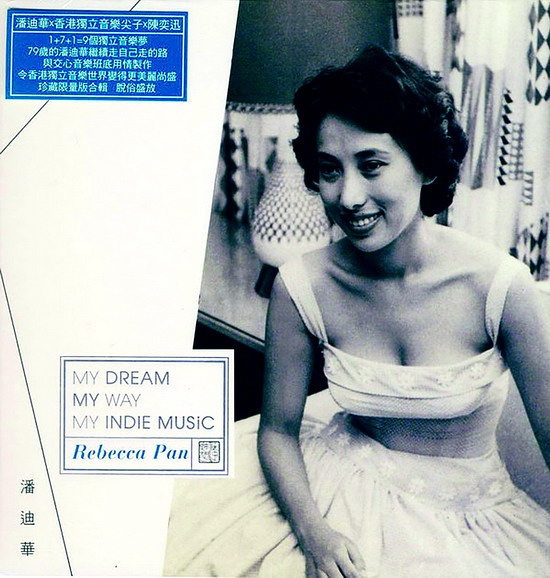


Родилась 29 декабря 1931 г.
Певческая карьера началась в 1957 г.
Одна из её песен, которую Ребекка Пан записала в восемнадцатилетнем возрасте, кратко проигрывается в «Любовном настроении», — это английская версия индонезийской народной песни «Bengawan Solo».