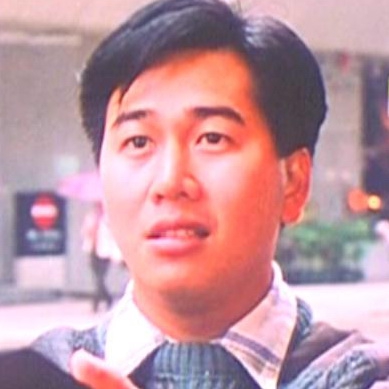
Clarence Ford 霍耀良


Clarence Fok studied design, started out in television and directed one of the first Hong Kong films shot in Moscow. Outside Hong Kong he is best known for Naked Killer, which he made with Wong Jing. After moving to Beijing, Fok worked extensively on TV series, and he returned to Hong Kong cinema with, among other things, Special ID starring Donnie Yen.
Clarence Fok was born in Hong Kong to a family of Shanghai natives. He graduated from the design department of the Hong Kong Polytechnic, and while still a student he tried his hand at experimental filmmaking. In 1978 he trained as a production assistant at RTV, and the following year he moved to TVB. There he wrote scripts and worked on the production of series. Among them were The Passenger (1979), The Good, the Bad and the Ugly (1979) and The Bund (1980). In 1981 Fok became a producer at TVB.
He began directing feature films while still working at the channel. His first was The Man from Vietnam. Shooting started in 1980, and the film was released in 1982. An earlier release was Job Hunter (1981), a drama about young people starring Danny Chan and Leslie Cheung. By the mid-1980s Fok had focused on cinema. Occasionally he appeared on screen himself. For his role in the comedy Let's Make Laugh II (1985) he was nominated for a Hong Kong Film Award in the Best Supporting Actor category in 1986.
Fok moved easily from one genre to another. The romantic comedy The Greatest Lover (1988) was soon followed by the sci-fi action film The Iceman Cometh (1989). In 1990 he directed The Dragon from Russia. According to the Hong Kong Film Archive, it was the first Hong Kong film shot on location in Moscow. There Fok's eye for composition, noted in his later work as well, served him well. Even in a quickly made action film he devoted a great deal of attention to how the setting looked.
Fok directed Naked Killer (1992) from a script by Wong Jing, who was also the producer. The leads were played by Chingmy Yau, Simon Yam and Carrie Ng. The film became a cult favorite outside Hong Kong. Wong much later recalled how the provocative posters featuring Yau and Ng were made. The photographer was a woman, and neither the producer nor the director was allowed on set. Judging by the account of one of Fok's interviews, he himself disliked shooting explicit scenes with actors he knew. He was not especially eager to repeat this work, even though the film was a success.
In 2003 three of Fok's friends died, among them Leslie Cheung. Hong Kong reminded him of them, and in 2004 he accepted Tsui Hark's offer to work on the television version of Seven Swords. Seven Swordsmen came out in 2006. Fok settled in Beijing and began working extensively in mainland television. In interviews he recalled how he got used to life in Beijing: he rode the subway, went to the market and haggled like any city dweller.
Fok returned to Hong Kong feature films in 2013 with Together and Special ID. The idea for the second film came after he read a newspaper article about an undercover cop. He immediately pictured his friend Donnie Yen in the role and arranged it with him over the phone. For the female role Fok was looking for a new face and offered it to Jing Tian, whom he had seen in an office. She had no martial arts training. After two weeks of auditions the actress trained for two months, and on set, according to Fok, individual scenes were still reshot dozens of times. The following year Fok worked with Yen again, this time as executive producer of The Monkey King (2014).
Fok died in Hong Kong on February 1, 2024. News of his death only emerged in March of the following year. Tenky Tin, a representative of the filmmakers' association, said he learned of it from the family in February 2025 and verified the information before reporting the death. Tin spoke of heart disease and kidney cancer. The year of birth listed in Fok's archival record does not match the age given in the obituaries at the time.