


Connie Chan Po-Chu 陳寶珠


Years before she became the darling of Hong Kong's young audiences, Connie Chan mostly played male roles. She learned to portray warriors and scholars from the opera star Yam Kim-Fai. In the 1960s her films played simultaneously across several cinema chains, and in 1972 she left the movies. Connie agreed to return to the stage many years later, when she was offered the chance to play Yam herself.
At the age of four, a girl named Ho Pui-Kan was adopted by Cantonese opera performers Chan Fai-Lung and Gung Fan-Hung. She was born in Guangzhou in 1947, and in her adoptive family she was given the name Chan Po-Chu. It was under that name that Hong Kong came to know her. Connie Chan first took the stage in 1953. She learned the basics of stage combat from Fan Guk-Fa, a master of Peking opera. In 1960 Connie became a pupil of Yam Kim-Fai, who was famed for her roles as young warriors and scholars. By then Connie was already appearing in films, including Madame Qin Xianglian (1958) and The Scout Master (1959). Some archival records name the 1958 film about Qin Xianglian as her first work, while others point to a different picture.
While her peers sat at their desks, Connie was away on set. By 1966, by the film archive's count, she had appeared in 141 films. Most were costume pictures, and in no fewer than eighty-five of them she played men. Among her characters were swordsmen, as in The Six-fingered Lord of the Lute (Part 1) (1965), one of the pictures of that era released in several parts at once. Connie said she had completed only the first year of secondary school in a regular school. She missed so many lessons because of filming that continuing her studies was no longer possible.
Connie also remembered what went on behind the scenes. For flying scenes she was dressed more thickly, and a whole team of stuntmen pulled the wire. Rain was made with a hose, and waterproof clothing was worn under the costume. According to Connie, there were no injuries. Fans waited for her at the studio gates, where outsiders were not allowed in, though some managed to get through. There was a canteen at the studio, but her female admirers still brought Connie chicken legs and siu mai. She remembered such gifts even decades later.
In 1966, in the melodrama You Do Me Wrong, Connie played a leading role in contemporary dress for the first time. That same year saw the release of Movie-fan Princess, Colourful Youth and Girls Are Flowers. With colour came pretty dresses, long loose hair and songs that female viewers could hum on their way home from the cinema. Connie felt she danced worse than all her film friends and took lessons before every dance number. The young factory workers who made up a noticeable part of her audience also recognised the lives her characters led. The girl on screen might go to work in a factory to support her younger siblings or help her parents. Connie still appeared in films that required her to fight. In Lady Bond (1966), for instance, she also sang. The songs from Lady Bond and Colourful Youth became popular in their own right. In 1967 Connie appeared in thirty-two pictures.
One of her regular partners was Josephine Siao Fong-Fong. In the mid-1960s, Connie and Siao, together with five colleagues, formed the sisterhood of the Seven Princesses. All seven appeared together in only two parts of the film of the same name: Seven Princesses (Part 1) (1967) and Seven Princesses (Part 2). Meanwhile, fans of the two actresses argued with each other, and the newspapers readily turned these arguments into stories of a rivalry between Connie and Siao. Connie said they were friends and divided four cinema circuits between them. The public was no less concerned about her relationship with Lui Kei, with whom she often played lovers. The press wrote that her mother had parted the lovers. According to Connie, Lui was married, she herself had no time left for dates, and they never met alone.
After I Will Remember You Always (1970), Connie left for the United States. Cantonese-language Hong Kong films were by then losing ground at the box office to Mandarin-language pictures, and her mother suggested that after her tour she stay on and finally learn English. Connie enrolled in a school for adults. She took the bus to class and brought her lunch with her. In Chinatown people recognized her; beyond its borders she could go about her business undisturbed. In 1972 Connie came to Hong Kong on holiday and appeared at Shaw Brothers in the action film The Lizard (1972). After that she left the movies. By then, according to the Hong Kong Film Archive's count, she had appeared in roughly two hundred and forty films.
Connie met Jimmy Yeung, her future husband, in the United States. She joked that at first he courted her through her mother. They married in 1974, and a year later their son was born, the future actor Dexter Yeung. The marriage lasted about eight years. Connie said the divorce was hard on her, and that her son, her mother, friends and even fans supported her through it. When she managed to find her birth mother's phone number, Connie called her, but was never ready to meet. In the same interview, speaking of her adoptive mother, she burst into tears. Even many years later Connie spoke of the divorce with regret. If she could live her life over, she would have wanted to keep the family together for her son.
In the late 1990s the playwright Raymond To wrote a play about Yam Kim-Fai. Connie was invited to play her own teacher. Friends warned her, reminding her that audiences remembered her as very young, and that she had not performed before them for almost thirty years. But she liked the play, and in 1999 she took the stage. The production ran for more than a hundred performances. Other plays and concerts at the Hong Kong Coliseum followed, and Connie returned to numbers from Yam's operatic repertoire, including Dream of the Red Chamber. Connie also performed at charity evenings for a leukemia foundation. For a time the press speculated that her manager would not allow her to take part in such events. In 2014 Connie's former manager denied this. According to her, they worked together for three years and parted ways because they expected different things from the work. At first they did not get along, but later they began meeting again for dinner or a game of mahjong. When in 2017 she was asked about films and TV series, she said she did not want to return to acting. Too much had changed during her absence, including the way an actor has to present herself to the public. In 2024, at a gathering marking a charity opera performance, Connie was asked about the anniversary of Seven Princesses. She would have preferred to celebrate it in Hong Kong. The trip would have meant packing suitcases, and she did not like that.
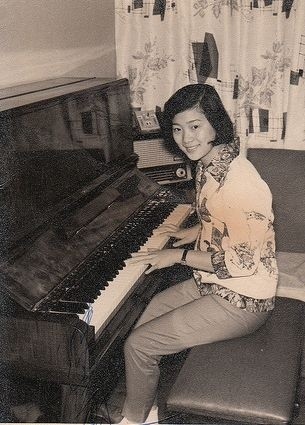
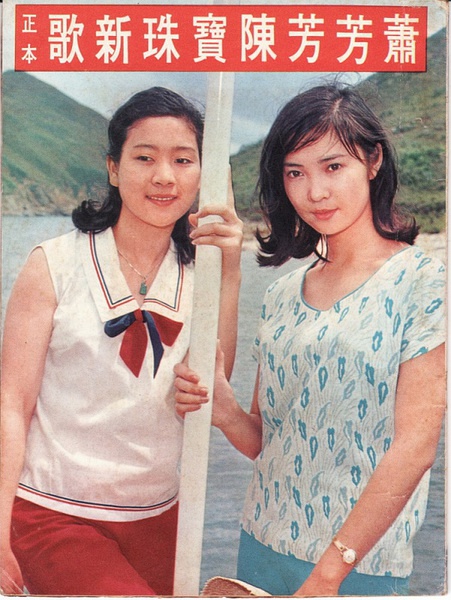


P.S. "Среди кантонских «семи принцесс», которые доминировали в кантонском кино в 1950-60-х годах, выделялись две. Первой была Жозефина Сяо, а второй — ее соперница Конни Чан.
Дочь двух оперных звезд, Чан Фэй Нун и Кун Фань Хун, Конни Чан в юном возрасте обучалась северным и южным боевым искусствам. Она начала свою актерскую карьеру еще ребенком и, следуя темпу съемок того времени, штамповала фильмы один за другим. Чан появлялась во всех возможных на то время жанрах фильмов: китайская опера, конечно же («Любовь на горе»), но также уся пянь («Меч побеждающий»), фэнтезийные фильмы («Король обезьян и черти») или даже романтические романы («Маньли, я люблю тебя»). Ее продукция в 180 фильмов превзошла ее соперницу, несмотря на гораздо более короткую карьеру.
Чан пришлось замедлиться в начале 70-х, в период, когда мандаринские постановки штурмовали кассовые сборы и оставили кантонское кино далеко позади. Затем она использовала это как возможность поехать в США на учебу, как и ее соперница. Во время отпуска в Гонконге Чу Юань (который много работал с Чан в 60-х) убедил ее приехать и присоединиться к студии Shaw Brothers вместе с ним, чтобы снять «Ящерицу». После этого фильма Чан решила окончательно уйти на пенсию и ушла из индустрии развлечений в 1972 году. "