


Sun Yat-sen 孙中山
Sun Yat-sen studied medicine in Hong Kong. The city later became one of the bases from which he and his comrades prepared uprisings against the Qing. In Bodyguards and Assassins, Sun comes to Hong Kong for a secret meeting. He appears on screen only briefly, yet the entire film hinges on his arrival and on what people — many of whom have never even met him — are prepared to do to keep him safe. The assassination attempt itself was invented for the film, but Hong Kong's role in his revolutionary work was very real.
Sun Yat-sen (孫逸仙, also known as Sun Wen and Sun Zhongshan) was born on 12 November 1866 in the village of Cuiheng in Guangdong province. He attended a village school, then went to join his elder brother in Hawaii. There he learned English and continued his education in Honolulu. Returning to China in 1883, Sun soon moved to Hong Kong. In 1887 he enrolled at the Hong Kong College of Medicine for Chinese and five years later graduated at the top of his class. The colonial authorities did not recognize the college's diploma, and Sun began a medical practice in Macau, then worked in Guangzhou.
In 1894 Sun returned to Hawaii and founded the Revive China Society in Honolulu. The very next year his supporters attempted to raise an uprising in Guangzhou. It failed, and Sun had to leave. In 1896 in London he was detained by staff of the Chinese legation. Sun's former teacher in Hong Kong, James Cantlie, helped secure his release. The case was followed by the British press, and after his release Sun himself wrote a book about what had happened. In exile he spent years travelling through Japan, the United States and Southeast Asia, seeking supporters and raising funds among Chinese living abroad. In 1905 in Tokyo several revolutionary organizations merged into the Tongmenghui, or United League, which he headed.
Sun learned of the uprising that began in Wuchang on 10 October 1911 from newspapers while he was in the United States. When he returned to China in December, representatives of the provinces that had broken away from the Qing were already negotiating the creation of a common government. On 29 December they elected Sun provisional president, and on 1 January 1912 he took office in Nanjing. The imperial court still remained in Beijing, and the strongest army in the north belonged to Yuan Shikai. Sun agreed to yield the presidency to him in exchange for the abdication of Puyi and recognition of the republic. After the abdication in February Sun resigned, in March Yuan took the oath of office in Beijing, and on 1 April a ceremony was held in Nanjing at which Sun formally relinquished his powers.
He soon fell out with Yuan. In 1913, after the assassination of Song Jiaoren, Sun backed an armed challenge to the president. The Second Revolution was defeated, and Sun again left for Japan. There he united his followers into the Chinese Revolutionary Party, and in 1915 he married his former secretary Song Qingling. After Yuan's death Sun sought the restoration of the provisional constitution and parliament. In 1917 he headed in Guangzhou a military government of the Constitution Protection movement. This government contested Beijing's authority. Under its program, constitutional rule was to come after two stages of transition. First the country would be governed by the military, and then a revolutionary government would prepare it for self-government.
In 1923 a joint statement by Sun and the Soviet representative Adolf Joffe launched cooperation with Moscow. With Soviet help Sun reorganized the Kuomintang and entered into an alliance with the Chinese Communists. In 1924 he delivered lectures on his "Three Principles of the People" – nationalism, democracy and the people's livelihood. That same year the Whampoa Military Academy opened near Guangzhou, and Sun appointed Chiang Kai-shek as its commandant. In November he set off for the north to discuss convening a national conference and abolishing the unequal treaties. In Beijing he fell gravely ill and died on 12 March 1925. According to the autopsy protocol, the cause was a tumor of the gallbladder that had spread to the liver. More than a year still remained before the Northern Expedition, in which Whampoa officers took some of the command posts.
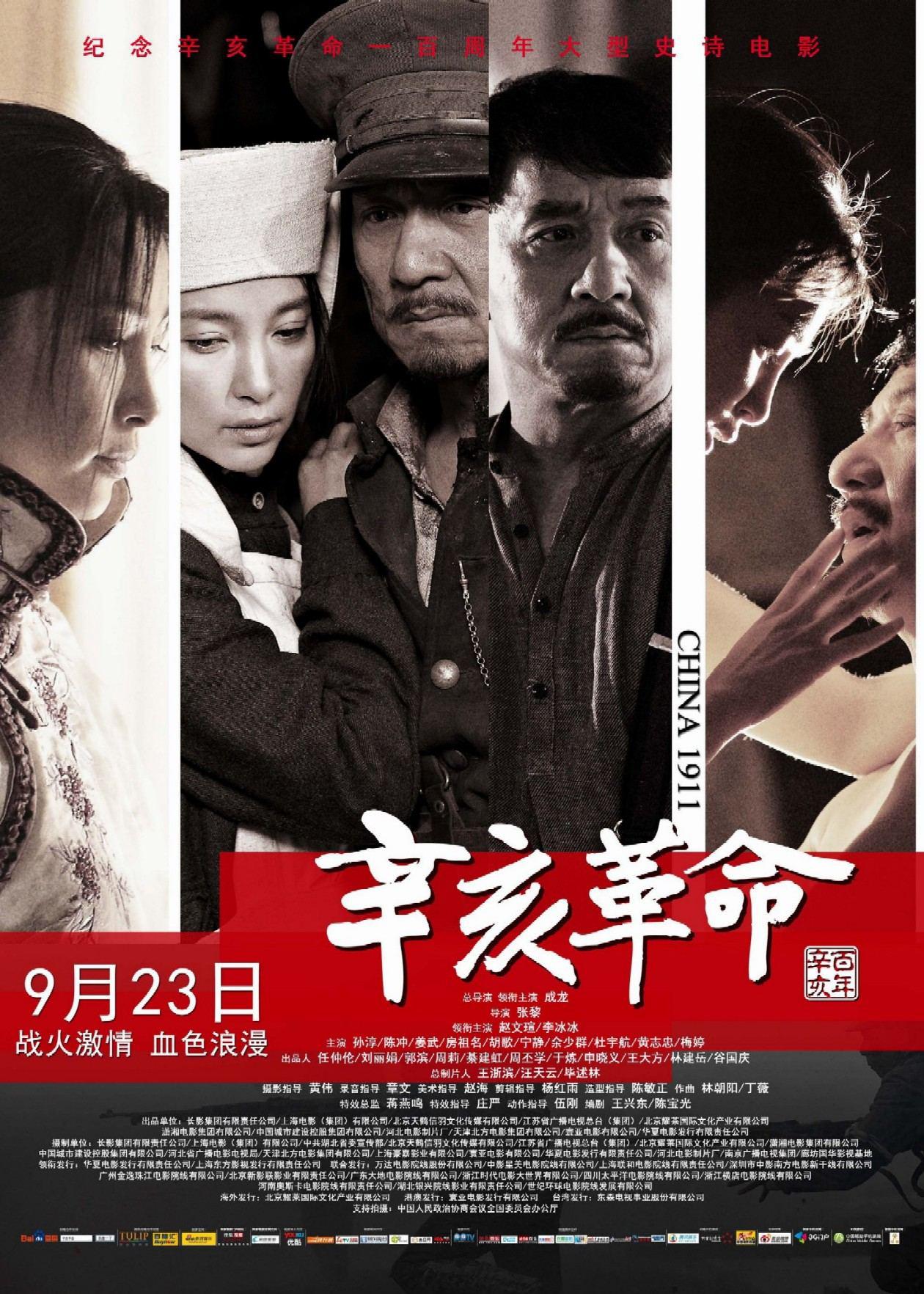
Winston Chao played Sun at different stages of his life. In The Soong Sisters (1997), Mabel Cheung shows him alongside Soong Ching-ling; in Road to Dawn (2007), directed by Derek Chiu, he seeks support from the Chinese community in Penang; and in 1911 (2011) he returns to China, where the revolution has already begun. In Bodyguards and Assassins (2009), Sun, played by Zhang Han-Yu, remains in the background, while the protagonists are the people of Hong Kong who take it upon themselves to protect him. Their clashes with the assassins sent by the court were invented for the film.

