Chang Kuo-Chu 張國柱


Chang Kuo-Chu was teaching physical education and already raising two sons when he landed his first notable film role. In Taiwan he became known for the melodrama Your Smiling Face, while in Hong Kong he almost immediately fell in with New Wave directors and played one of his most unsettling roles in Love Massacre. As he grew older, Chang increasingly played fathers. His role as a modest Taipei civil servant in A Brighter Summer Day earned him a Golden Horse nomination. In the same category and for the same film, his son Chang Chen was also nominated.
Chang Kuo-Chu was born on October 17, 1948. His family came from Yuyao in Zhejiang Province. Chang graduated from the Department of Physical Education at National Taiwan Normal University. While still a student, he appeared in a black-and-white motorcycle commercial. The students from the art department were looking for a performer among the future PE teachers. Later he appeared in commercials for soap and shampoo. At the Deming Commercial Vocational High School, where Chang went to work after graduating, his students nicknamed him after that very shampoo. And the principal, as Chang recalls, was constantly calling him in for a talking-to over his hair being too long. By the age of thirty he decided to leave teaching and try his hand at cinema.
Producer Chow Ling-Gong was looking for actors for Your Smiling Face (1979). In Taiwanese melodramas of the time the same stars passed from film to film, and the producer decided to cast new faces in the leads. So the main roles went to Chang and Sibelle Hu. Chang played a tennis player who helps a young teacher get over the death of her beloved. South China Morning Post calls this film his screen debut. Chang's filmography also includes earlier work, starting with Naughty! Naughty! (1974), and the Taiwanese United Daily News mentions that before Your Smiling Face he had already appeared in films in small roles.
In that same year, 1979, Chang played the master of a fortress in The Butterfly Murders, the first film by Tsui Hark. Tsui shot his wuxia as a detective story in which even the most outlandish techniques have a perfectly earthly explanation, and the master of the fortress where the killer is being sought has secrets enough of his own. Two years later Patrick Tam cast Chang in Love Massacre (1981). The film begins almost like just another romantic drama with Brigitte Lin, and in the man her heroine grows close to it is at first easy to recognize the charming Chang of Your Smiling Face. Chang plays with such gentleness that in the opening scenes it is hard to imagine just how this man will turn the melodrama into horror.
In Paris Chang worked with Tony Au on Last Affair (1983), where he played the husband of Carol Cheng's heroine, who goes off to France and there meets Chow Yun-Fat's character. And in An Amorous Woman of Tang Dynasty (1984) he played the blacksmith Ouyang, who rejects the advances of the poetess Yu Xuanji (Pat Ha). For this role Chang was nominated for a Hong Kong Film Award as Best Supporting Actor. In Taiwan in those years he appeared in Dark Night (1986), an adaptation of Li Ang's novel about marital infidelity against the backdrop of the stock market boom of the eighties.
By the time Chang left teaching, he already had two sons from his marriage to his classmate Zhao Xinran. She also taught physical education and took the boys with her to the school where she worked. Their father could be away on a shoot for several months. The younger one, Chang Chen, later recalled that his father was like Santa Claus to him – he would appear with presents and vanish again. At home Chang would pace from corner to corner for long stretches, memorizing his lines. To his son the habit seemed strange until he himself became an actor. When Chen was in primary school, his father took him to Tsai Ming-Liang's children's theater troupe. There he was first given the role of a marionette, and for skipping classes he was assigned to play a little mouse.
In A Brighter Summer Day (1991), Edward Yang cast all three of them. Chang Chen played the Taipei teenager Xiao Si, the elder son Chang Han played his brother, and Chang Kuo-Chu himself played their father. His character, a low-ranking civil servant, tries to raise his children by the same rules he has always lived by. When the secret police come for him, it becomes clear that those rules can scarcely protect even him. The shortened version that Taiwanese audiences first saw was missing some of the father's scenes, including the episodes connected with the White Terror. Both father and son were nominated for a Golden Horse for Best Actor. Five years later Yang cast them again in Mahjong (1996), where Chang Kuo-Chu played the father of one of the young swindlers, a man trailed by old debts.
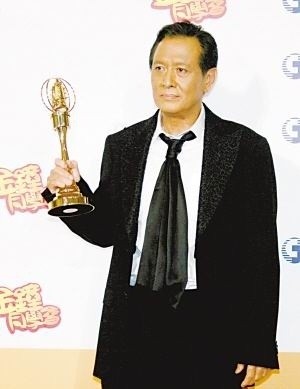
By the late 1980s Chang was already working in Taiwanese television, and in the 2000s series came to occupy most of his time. In The Hospital (2006) he played Hsu Da-Ming, head of the internal medicine department, who has his eye on the post of hospital director and is meanwhile scouting for a son-in-law. In 2007 he received a Golden Bell as Best Supporting Actor for the role. Two days later it emerged that the winner's name had been read out at the ceremony from the wrong list. Tai Bo, who appeared on the list under his real name Chang Chia-Nien, had scored one point more. According to the jury chairman, the staff were confused by the two actors sharing the same surname. In the end both were declared laureates. Chang told TVBS that he had wanted to dedicate the award to his 101-year-old father, and when he learned of the mix-up he could not bring himself at first to tell him what had happened. The actor promised to give the prize money of one hundred thousand Taiwanese dollars to charity.
Chang had not played a leading role in a film for many years when he received the script for The Drunkard (2010). It was an adaptation of a novel by Liu Yichang, which the film critic Freddie Wong had taken on to direct. Chang had first met him in Paris, on the shoot of Last Affair. Wong was a student at the time, and the film's producer introduced them to each other. Since then, by Chang's account, they had never once met. Now Wong proposed that he play a Shanghai writer who in early 1960s Hong Kong earns his living with pulp novels and gradually drinks himself away. Chang had waited years for such a role, and yet he did not agree at once. Most of the lines were in Cantonese, some in the Shanghai dialect, and he feared this would get in the way of his acting. In those days Chang spoke rather sharply to Oriental Daily about Taiwanese series, in which, he said, everything had come down to monotonous love stories.
He and Zhao Xinran divorced in 1994. In 2025 the Taiwanese outlet NOWnews cited Chang's alleged extramarital affair as the reason for the divorce. The report remained unconfirmed. Chang himself, speaking to journalists before his younger son's wedding in 2013, called his first marriage unsuccessful and said that family relationships take work. Chang had first spoken of a second marriage back in 2007, when he said he was going to marry his girlfriend A-Mei and hold a quiet wedding in Spain. According to the Taiwanese press, the wedding took place in 2008. A-Mei is 23 years his junior.
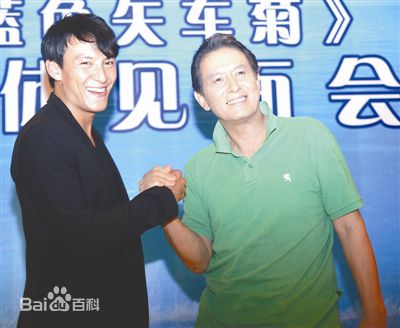
In his later films, Chang often played men accustomed to deciding other people's fates. In Cold War 2 (2016), his Peter Choi has already stepped down as head of the Hong Kong police but retains his connections and influence within the force. In spring 2019, HKCinema reported that shooting had begun on Old Men. Chang took part in a press conference in Shenzhen alongside Wang Qian-Yuan, with whom he was to appear. By autumn, another member of the project, Ethan Li, confirmed to Hong Kong's Apple Daily that filming had been suspended due to funding problems. In The Story of Xi Bao (2020), Chang played the wealthy Xu Cunzi, who takes a young female student under his wing, and in The Coldest City (2023) he was the influential merchant Li Huan.
In November 2025, Chang Chen, accepting his second Golden Horse, thanked his father from the stage for introducing him to cinema. And in January 2026 he revealed that his father had stopped acting. They still discuss films, though their father is now more interested in how his son approached a role than in how he played it. According to his son, Chang Kuo-Chu himself goes out for a run every day.