


Nie Xiaoqian 聂小倩
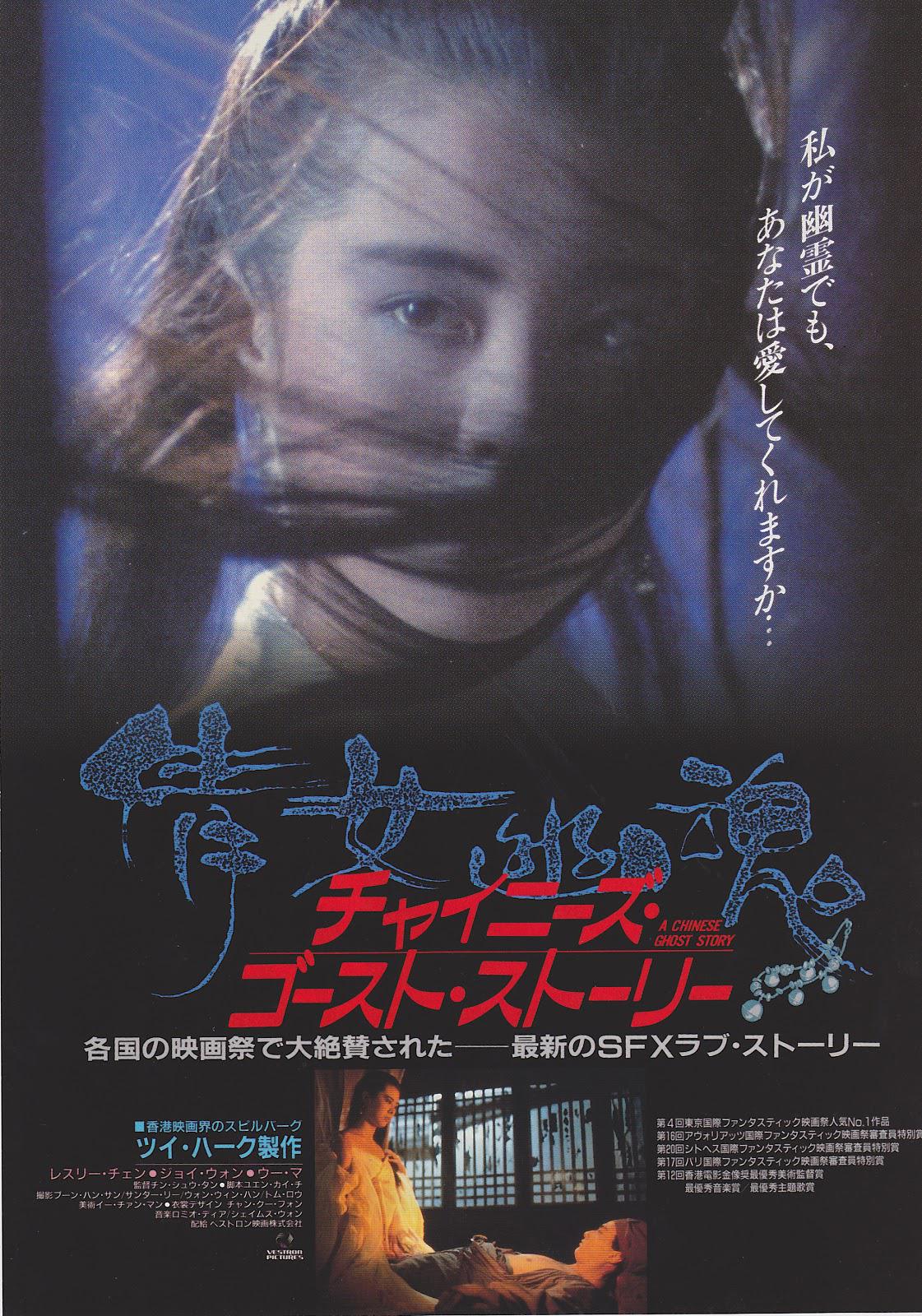
For many, Nie Xiaoqian (聂小倩) remains the woman Joey Wong Cho-Yin played in Tony Ching Siu-Tung's A Chinese Ghost Story (17184). Loving her brings Leslie Cheung Kwok-Wing's character nothing but trouble, and both know they have very little time together. In the tale by Pu Song-Ling, who invented Xiaoqian, the girl manages both to settle in among the living and to win over her chosen man's mother. Cinema has returned to this story many times, and each time the girl's fate depended on whether she would be allowed to stay in the world of humans.
Xiaoqian died at eighteen. In Pu Song-Ling's tale from the collection "Liao Zhai," she herself states her age and explains how she came to be at an abandoned Buddhist temple near Jinhua. She was buried there, and there a demon took possession of her, forcing her to lure travelers. Xiaoqian tries to seduce Ning Caichen, who has stopped at the temple, and when he sends her away, she leaves him gold. Ning throws the ingot away. Later she explains that the gold, too, was a lure. Convinced that Ning can be trusted, Xiaoqian warns him of an attack and asks him to take her bones. He finds the grave by a crow's nest in a poplar tree.
Ning buries Xiaoqian's remains near his home, and she asks to be allowed to stay with the family. Ning is married at the time, his wife is gravely ill, and his mother is frightened by the very thought that her son might take a ghost as his wife. Xiaoqian first lives with them as Ning's sworn sister, helps about the house, and in the evenings reads Buddhist sutras at his side. After six months she is already eating a little thin gruel, and Ning's mother grows so attached to her that she has her sleep in her own room. After the death of his first wife, Ning marries Xiaoqian. When the demon catches up with her, she herself asks Ning to fetch the leather bag left by the swordsman, which she had previously feared. In the finale Ning passes the examination for the jinshi degree, Xiaoqian bears him a son, and when he takes a concubine, both women bear him another son each.
In 1960 Li Han-Hsiang made The Enchanting Shadow at Shaw Brothers with Betty Loh Tih. In the film the girl likewise asks to be buried, and Ning frees her from the demon's power by taking her ashes to her homeland. The picture was entered in competition at the Cannes Film Festival, and the role of Xiaoqian became one of those that brought Loh Tih fame as an actress of classical Chinese beauties.
In A Chinese Ghost Story (1987), which Tony Ching Siu-Tung directed for producer Tsui Hark, Ning and Xiaoqian are destined to be parted. The swordsman played by Wu Ma, Ning's neighbor at the temple, becomes an ally of the lovers and helps them in their struggle against the demons. This battle takes the place of the life Xiaoqian lives with Ning's family in Pu Song-Ling. The film received two sequels. In the third part, A Chinese Ghost Story III (1991), Joey Wong Cho-Yin again plays a ghost, but one named Lotus. In the 1997 animated version released by Tsui Hark, Xiaoqian once again became the heroine of her own story.
On television Xiaoqian was played by Barbie Hsu Hsi-Yuan in A Chinese Ghost Story (2003) and by Yang Mi in Strange Tales of Liao Zhai (2005). Cinema returned to her in 2011. In the new A Chinese Ghost Story with Liu Yi-Fei, the swordsman himself is in love with Xiaoqian, and his relationship with her becomes part of her past.

