


Devil Guard: Art of Spiritual Origin 镇魔司:灵源秘术

 8.0



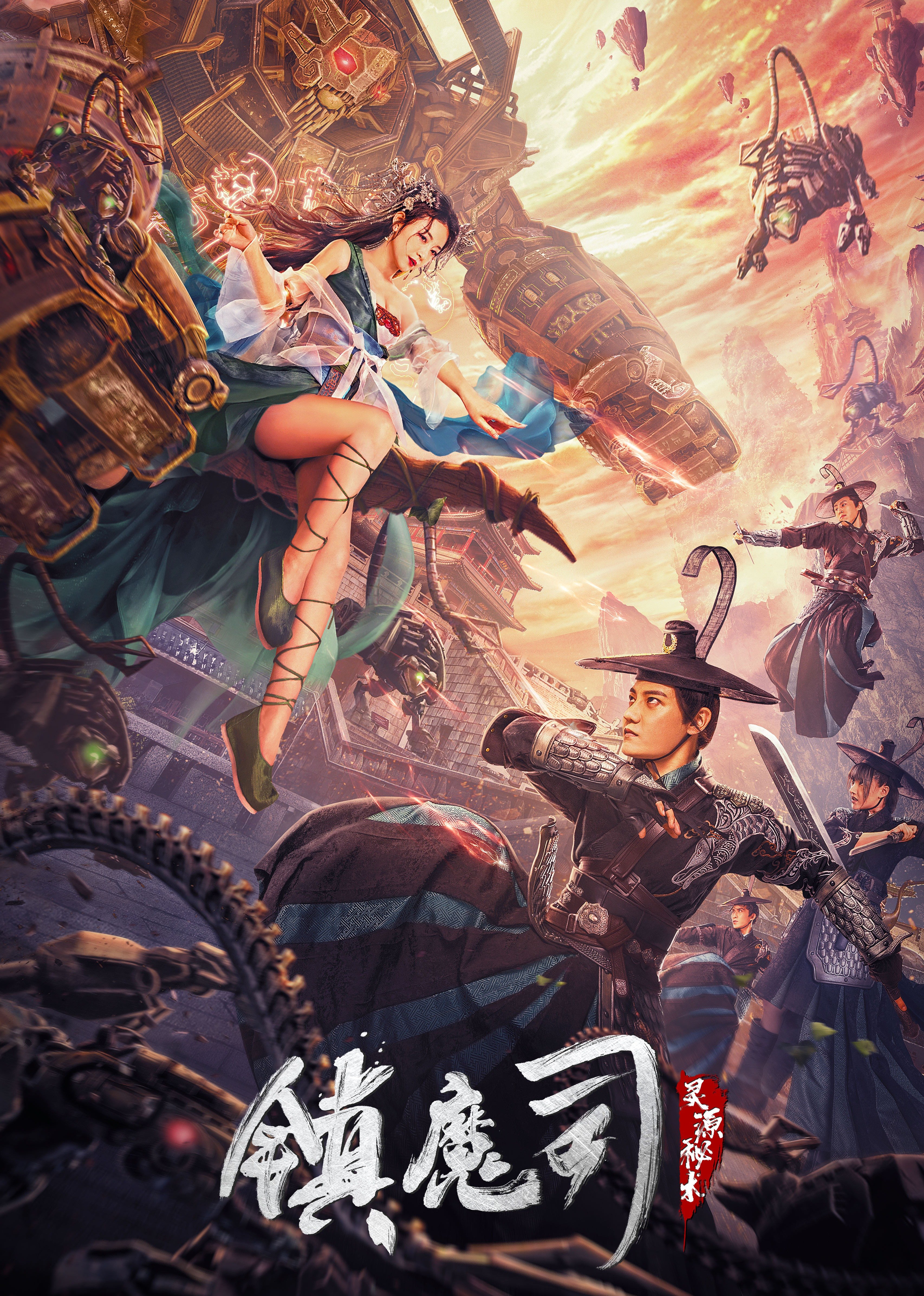 8.0
The action of Art of Spiritual Origin begins in a small village, where a squad led by Tang Lin-Feng, already familiar to us from the previous installments of the franchise, arrives. In the village, an ancient tree demon is about to awaken, and Tang Lin-Feng and his comrades must destroy everyone who has come into contact with it. Lin-Feng carries out the mission, but on his return he learns that he must join forces with the mechanisms master Gongshu Qi. To fight the tree demons, Gongshu is preparing a giant puppet, and to control it he needs the scroll of the mechanisms master Lu Ban – the very one because of which Tang Lin-Feng's entire clan was once destroyed. But hovering around Gongshu is the sorceress Gu Nian-Tong, well known to us from the previous installments of the cycle, and her involvement in any matter bodes nothing good.
In Chinese online cinema, even three films in one cycle is already a serious achievement, indicating either major audience success or extreme overconfidence on the part of the producers, and Art of Spiritual Origin is the fourth film in the Devil Guard franchise, all of whose installments, even more unusually, were made by the same people. It is also interesting that this entry's commercial performance turned out no worse than that of the previous films in the cycle, so Devil Guard may well continue.
The Devil Guard cycle splits into two parallel strands – the odd-numbered installments tell of the four elite fighters of the Ming squad, while the even-numbered ones follow Tang Linfeng, a fighter of the Ying squad, where outcasts and criminals serve, people the department is always ready to sacrifice and whose involvement in operations is not even particularly publicized. In the view of Chinese viewers who rate films on Chinese movie sites, the Tang Linfeng installments turn out more successful, and it is hard to argue – at least Art of Spiritual Origin is noticeably more interesting to watch than the third film, Rare Beasts of the Western Regions.
Unlike the four from the Ming squad, who are backed by good old-fashioned magic, Tang Linfeng is a master of mechanisms, heir to the semi-fantastical teachings of Lu Ban, which gives the films about him an unusual steampunk vibe that manifests both in the plots and in the visuals. On screen, all manner of mechanisms click, spin and assemble, from a water board that unfolds from a small cube to the already mentioned giant puppet propping up the heavens. What is more, all these marvels of technology coexist with demons and more traditional magic, so the world of Devil Guard feels at once diverse and coherent. Over four films, director Huo Sui-Qiang has thoroughly settled into this genre and this world, so Art of Spiritual Origin is an easy and engaging watch, especially if you enjoyed the previous installments.
The Devil Guard cycle is famous for the fact that Huo Sui-Qiang sees nothing wrong with, on the one hand, replacing the actor playing a character in the next film with another, and on the other, giving a well-liked actor a different role if his character from the previous picture does not appear in the next installment. Thus Tempo Zhang, who portrays Tang Linfeng in the second through fourth installments, played a different role in the first film, while the young actor Zhang Ji-Jun played three different characters across four installments. It is disorienting, but if you have made it to the fourth film in the cycle, you should already be used to its quirks.
8.0
8.0

