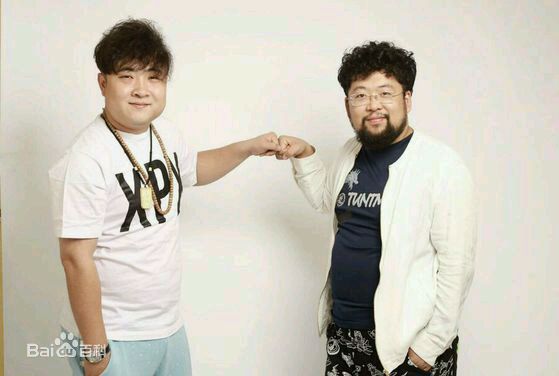
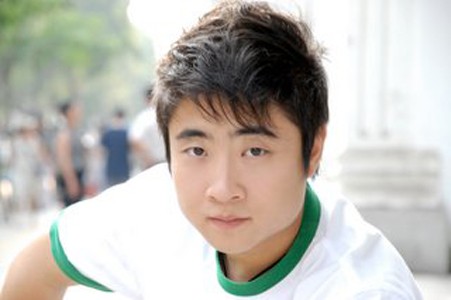
Qiao Shan 乔杉


Qiao Shan showed up to his theater academy entrance exams with a guitar. Years later, it came in handy for City of Rock, where he played a provincial musician putting together his own band. By then, Qiao was already an established presence in Chinese comedy. He started out with children's theater and rural touring shows, rose to fame in Da Peng's short sketches, and in Godspeed played a long-haul trucker about to meet his future son-in-law. In 2026, at the Beijing International Film Festival, Qiao won an award for his role as a stoker recently released from prison in the drama All the Good Eyes.
Qiao Shan was born on June 28, 1984, in Harbin, into a family of police officers. His father served in the criminal investigation department and was often away at work. At home he loved to sing and passed on his love of music to his son. Qiao himself once planned to become a policeman too, but in his senior years of school he took up the guitar and began performing in a school band. As he recalled, before he had a guitar of his own, he would stand in front of the mirror with a mop and pretend to play. He was especially fond of the Hong Kong band Beyond, whose concerts were shown on local television. One of the older members of his band enrolled at the Central Academy of Drama, and Qiao decided to try his luck there as well.
He arrived in Beijing at the end of 2002. At the audition he sang with his guitar, and in 2003 he was admitted to the acting department. Qiao thought he would be playing young heroes, and was very surprised to learn that the teachers had placed him in the children's theatre group, which needed actors who could sing, dance and act. After graduating in 2006, he went to auditions and took any theatre work he could get. For performances in villages outside Beijing he was paid eighty yuan. The performers hauled the speakers themselves, laid down a rug in place of a stage, and then, seven of them together, put on a programme of songs, dances and sketches. According to Qiao, once the only members of the audience were a child and a goose.
In 2008, when his father died, Qiao went back to Harbin. It was there that he got a call from a theatre looking for an actor for a children's production. He was planning to stay at home a while longer, but his mother persuaded him to return to Beijing. After the audition he was already on the bus home, certain that nothing had come of it, when he got a call offering him the role. He kept travelling to the villages, and then he joined the comedy troupe Happy Mahua and in time was able to live on his theatre earnings. During those years he met Mo Dan. In the first musical they worked on together she danced, while he had a tiny role. One evening over dinner some older colleagues advised him to change professions. After dinner he asked Mo Dan whether they might be right. She said she believed in him. In 2013 they married, and later Mo Dan became his manager. They have two daughters and a son, born in 2025.
In 2010 Qiao began performing on the television show Laughing Room (爱笑会议室). The programme aired on a channel in his home province, and his family could finally see his performances. Once the show went on the air, people began recognising Qiao on the bus. Then Da Peng, whom Qiao had met at Happy Mahua, invited him to appear in the web series Diors Man (2012). They shot it on a digital camera, and Qiao took no fee for his first job. His character, a regular at foot massage parlours, made such an impression on viewers that the nickname stuck to the actor himself. Da Peng also cast him in his Jian Bing Man (2015), and two years later offered him the role of Hu Liang in City of Rock. Here Qiao could already play the guitar and sing himself. He understood Hu Liang well — a man who hires a manager and puts a band together to save a rock park from demolition. At one time Qiao himself had thought that if acting didn't work out, he could try singing rock in Beijing.
At the end of 2018 came Kill Mobile, the Chinese remake of an Italian comedy about a dinner among old friends. Around the table the characters agree to read aloud every message that arrives on their phones. Qiao played Wu Xiaojian, one of the participants in this game. The HKCinema reviewer singled him out among the other actors, noting that he draws attention even in scenes without dialogue. In Bath Buddy (2020) Qiao again appeared in a setting familiar to viewers, but this time he played the owner of a bathhouse. He had known since childhood how bathhouses in northeast China are run, and at first thought no special preparation would be needed. Then a bathhouse attendant was brought in, and Qiao had to learn everything anew — how to wrap a towel around his hand, with what force and at what pace to work. The following year, in Hi, Mom, he played the heroine's father in his youth.
In the comedy Godspeed (2023), Qiao's character was again named Zhou Donghai, just like the bathhouse attendant, though this time he drove a truck. By then Qiao was already raising two daughters, but he doubted he could convincingly play the father of a girl about to get married. He talked to long-haul truckers and observed how they behaved at home and on the road. With his future son-in-law, played by Adam Fan Cheng-Cheng, his character simply cannot get along at first. Qiao played a father again in Winter and Summer (2026). His character drives his autistic son to see whales. Before filming, Qiao met families raising children with autism to understand what parents worry about and how they talk to their child.
In All the Good Eyes (2026), Qiao played Wei Feng, who works in a boiler room after prison. Qiao had long known the author of the novel, Zheng Zhi, and promised to help if he ever decided to make a film. The role came along later. Qiao recalled that on set the boiler room reminded him of childhood, when kids in the northeast would climb into such places and pick out half-burnt coal. Wei Feng has only two scenes. In the spring of 2026, this role earned Qiao the Tiantan Award for Best Supporting Actor at the Beijing International Film Festival. At the same ceremony, Yu He-Wei, who played the lead in the film, also received an acting prize.