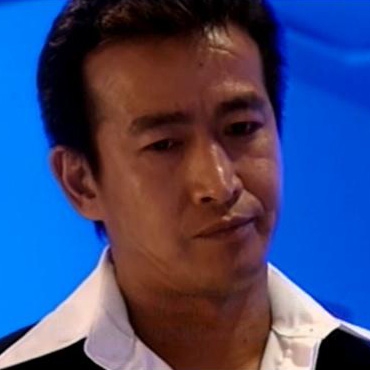


Robert Mak Tak-Law 麥德羅

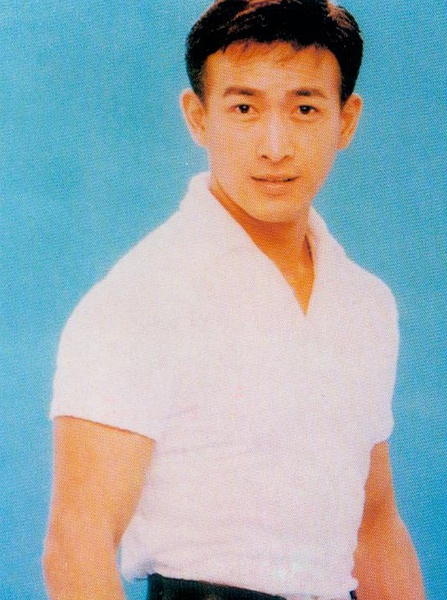
In the late 1970s, Robert Mak rose to fame in Hong Kong as a disco dancer. He wove high kicks and splits into his dancing, and at the Shaw Brothers studio, where he started as an extra, there was work for him in both musical comedy and kung fu films. In One Way Only he played a mechanic's apprentice obsessed with motorcycle racing, and in Martial Club he was the cocky friend of Wong Fei-Hung. Later Mak worked extensively in Taiwanese television, and as roles grew scarcer he appeared more and more often on stage, eventually opening a singing and dance school together with Lau Lai-Ping.
Robert Mak Tak-Law was born on 10 December 1958 in Hong Kong. According to the actor, his father was born in Malaysia and moved to Hong Kong as a teenager. Mak himself is a Muslim and was given the surname Muhammad at birth. His brother Peter Mak Tak-Woh also became an actor. In an interview with Wen Wei Po, Robert called him his younger brother, although some biographical references list Peter Mak Tak-Woh as the elder. His mother loved ballroom dancing and encouraged her son's interest in dance, while he took up kung fu under the influence of Bruce Lee's films. He mastered judo and southern styles of wushu. As Wen Wei Po reported, after seeing Saturday Night Fever (周末狂熱), Mak became hooked on disco and figured out how to work high kicks and the splits into his dancing.
At the Shaw Brothers studio, Mak initially worked as an extra. In Shaolin Temple (1976) by Chang Cheh he is one of the students, and in Crippled Avengers (1978) he is one of the villain's henchmen. In 1978, Mak applied for the studio's acting courses for martial arts films and won a Hong Kong disco competition held by the TVB television channel. Some biographical references date the victory to 1979, but reports of Mak performing at the world championship had already appeared in December 1978. He represented Hong Kong in London and, according to Kung Sheung Evening News, took fourth place. At home he was nicknamed "the king of dance." After the Hong Kong competition, Mak signed a contract with Shaw Brothers, and the studio found a suitable role for him. In the musical comedy Disco Bumpkins (1980) he played a guy nicknamed Hamburger. The film grossed more than four million Hong Kong dollars and made the top ten highest-grossing Chinese-language pictures of the year in Hong Kong. That same year, Mak choreographed the dances for the studio comedy Hex Versus Witchcraft.
One of his first leading roles came in One Way Only (1981), the directorial debut of Danny Lee and Lam Nai-Choi. His Ah Chan gets a job as an apprentice at a motorcycle repair shop in order to get closer to the racers. The shop owner, played by Lee himself, helps him compete in a race in Macau. Mak is equally good in the scenes between races, where his character hangs out with his buddies and tries to figure out how to make a living. And in Martial Club by Lau Kar-Leung, released the same month, he played Wang Yin-Lin, a friend of the young Wong Fei-Hung from another kung fu school. Both love to test their strength against each other, but Mak's character has a special gift for turning a friendly contest into a quarrel. At the end of 1981, Mak became one of the ten winners of the Wah Kiu Man Po newspaper's "Golden Ball" award in the film and television category. As he later recalled, Ti Lung and Kara Hui were on stage, and it felt to him as if it were all happening in a dream.
Lau Kar-Leung kept calling on Mak after Martial Club as well. In The Lady Is the Boss (1983) he plays one of the students at the school taken over by Kara Hui's character, and in The 8 Diagram Pole Fighter (1984) he is the third brother of the Yang family. His role in Opium and the Kung-Fu Master (1984) is far more prominent. Ti Lung plays a master addicted to opium, and Mak plays his student Lu Guasi, who watches his teacher lose his form and the respect of those around him. In the first half of the picture, as an HKCinema reviewer noted, it is the student who seems to be the main character. That same year, in The Siamese Twins, Mak played Michael, an admirer of the heroine. In The Protector (1985) with Jackie Chan he has a very small role — he appears in a gym scene added to the Hong Kong version.
Around the turn of the century Mak still appeared regularly in action films – for instance, he played a killer in Fist Power (2000). On ATV he took the role of Wang Zhigang in the series Law 2002. After that the roles grew fewer. In 2015 he played a small part as Mr. Ma in the crime drama Port of Call. Yet Mak still performed a great deal. In 2016 he and the actor Wong Wai-Tak formed the duo "Ho Tak Hing Dai" (好德兄弟), recorded the song "Jam德起" and gave a concert at the Kowloon Bay exhibition centre. Mak also toured with concerts to Malaysia. In 2019 he told Ming Pao Weekly that he used to give more than ten shows a month, but amid the protests in Hong Kong the number had halved. The news reminded him of the 1967 riots, which he had witnessed as a child. He recalled how at home he was told not to kick milk cans on his way to school – they were afraid the cans might contain explosives.
In 2024 the Hong Kong Film Archive included Martial Club in a programme about martial arts on screen. That same year an interview with Mak was included in the extras of the British release of The Holy Virgin Versus the Evil Dead, in which he had appeared in the early 1990s.
In the 1980s Mak dated Lau Lai-Ping, known as Apple, the future founder of the Big Echo karaoke chain. As he told Ming Pao Weekly, she used to come to his dance studio, and he would drop by her karaoke equipment shop to sing. Filming trips kept them apart, and in the end Lau married someone else. Mak himself married a doctor he had met in Xi'an. In a 2026 interview he said that he and his wife had lived apart for long stretches and gradually drifted away from each other. After the divorce their son, who was born on the mainland, moved with his father to Hong Kong.
According to Mak, he met Lau again in 2003 at a commercial performance. In 2016 they announced their intention to marry. Oriental Daily reported at the time that by then they had been back together for about eight years. Two years later the same newspaper reported that Lau had announced a breakup after a woman called her and claimed to be having an affair with Mak. Mak told the paper that the caller was a fan and that there had been no affair. The couple made up, but the wedding was postponed again – in 2019 because of the situation in Hong Kong, and then because of the pandemic. In the summer of 2020 both caught Covid, and Mak spent two weeks in hospital. After his discharge, when there were almost no concerts, he would take a tape recorder and go to the park to warm up his voice. In December he and Lau opened a singing and dance school. In the autumn of 2023 they were still performing together at a charity evening for children from low-income families.
According to Lau, she and Mak separated in February 2024. In July she told Ming Pao Weekly that she had left him because of his infidelity and drinking. In August Mak responded in an interview with HK01 that there had been no other woman. By his account, Lau heard over the camera at their school as he, having had a drink, began telling students about his past romances. Mak admitted he had said too much and said he had asked her forgiveness and promised to give up drinking. In November Lau told on.cc that no third party had anything to do with their breakup.