


Li Yi-Min 李藝民

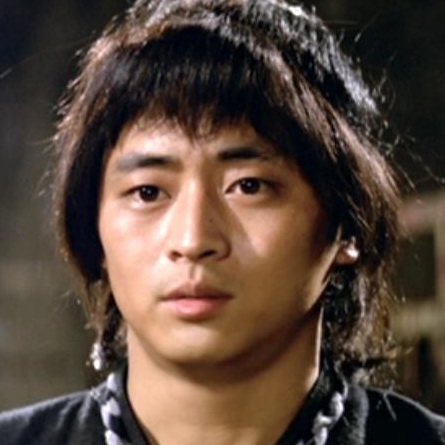
Li Yi-Min came to cinema from Peking opera and in the late 1970s became one of the regular actors of Taiwanese director Joseph Kuo Nan-Hong. The latter liked to cast him as students whom no one takes seriously at first. In The Mystery of Chess Boxing, his character is mocked by the whole school, and his first real lessons come from an old cook. In Chang Cheh's The Brave Archer, Yi-Min played the spoiled young prince Yang Kang. Later, after his Hong Kong period was over, he spent about twenty more years acting in Taiwanese TV series.
Li Yi-Min was born in Taiwan to a family of Peking opera performers. His exact date of birth remains uncertain. HKCinema and IMDb give 14 January 1953, while Chinese biographical reference books say 30 December 1951. His father, Li Tung-Chun, came to the island with an opera troupe in 1949 and stayed there. He played warriors and generals. He was so good as Guan Yu that people nicknamed him "the living Lord Guan." Li Tung-Chun taught at the Fu Hsing opera school, where his son also studied. As a 1983 Taiwanese article about opera-school alumni put it, Yi-Min was being trained as a wusheng, a performer of martial male roles, and appeared under the name Li Fu-Min. Opera, however, did not particularly appeal to him. While still at school he began working with the Union Film company, and after graduating he left the stage. Later, in Hong Kong, he did return to the stage and played in an opera episode about the flight of Lin Chong.
Li's earliest known film work is Girl Robinhood (1969). In the early 1970s he appeared extensively in all sorts of action films, from the period Rider of Revenge (1971) to Sheng Long Huo Hu (1972), in which he played Xu Jian. Standing apart in his filmography of that time are The Super Riders V3 (1975) and its sequels. In Taiwanese films inspired by the Japanese Kamen Rider, he played Tang Zhi-Wei, the second of the helmeted motorcycling heroes with insect eyes. Many years later Li recalled with a chuckle that audiences had remembered him from the very start as a guy who fights.
In the mid-1970s Li began working with Chang Cheh. In Seven Man Army (1976), shot in Taiwan, he played Senior Private Pang Bing-Lin, one of the soldiers defending a fortification against the Japanese army. In 1976 Li joined Shaw Brothers. In December came Shaolin Temple, in which he had the role of one of the monastery's new disciples, Huang Sung-Han. In his HKCinema review Boris Khokhlov noted that the film brought together nearly all the Shaw Brothers stars of the time. Chang Cheh was then assembling a new generation of actors, and Li was one of those the director began regularly casting in his films.
Li's most notable role under Chang Cheh is Yang Kang in The Brave Archer (1977) and The Brave Archer Part II (1978), adapted from Jin Yong's novel. Yang Kang grew up in the house of a Jurchen prince and, even after learning of his origins, clings to the position he owes the prince. The life of Guo Jing, the hero played by Alexander Fu Sheng, turned out quite differently, though their fathers had once sworn that their sons would be brothers. As played by Li, the young prince remains self-assured even far from court. The way he talks to the people he now depends on shows that he has rarely been denied anything. In those same years Chang Cheh also cast both actors in Magnificent Wanderers (1977), where Li has a far more simple-hearted hero, the wandering fighter Guan Fei. Work on the fantasy film Heaven and Hell (1980) dragged on for several years. It was begun in Taiwan back in 1975 and reworked at the Shaw Brothers studio. Li's character appears in all three stories. First he serves as a guard in heaven, and after reincarnation he drives a taxi.
By the late 1970s Li had terminated his contract with Shaw Brothers and returned to Taiwan. The leading roles came from Joseph Kuo Nan-Hong, who ran his own small film company. In The 7 Grandmasters (1978) Li plays a pesky youngster who latches onto a master of fist fighting and begs to become his student. While the old man tests his strength against other masters, the boy mostly takes beatings from the senior students. Li conveys this almost childlike persistence with comic charm, and by the finale, when it becomes clear why the boy was so desperate to learn to fight, he has already won the audience over. The long outdoor duels give viewers a proper look at the fighters' technique. In World of the Drunken Master (1979) Li has another comic role — the young Beggar Su. Together with a buddy he steals grapes, gets caught in the act and eventually masters the drunken style at a winery.
That same year saw the release of The Mystery of Chess Boxing (1979). Li's character, Ah Pao, is at first so helpless in a fight that his schoolmates happily use him as a punching bag. When Ah Pao finds a teacher, the man makes him study Chinese chess, and the lessons over the board gradually turn into preparation for a duel. Li knows how to show a fighter changing as his training progresses. Early in the film every movement betrays that he is bracing for a blow; by the finale he is the one setting the pace of the fight. In 1993 the Wu-Tang Clan named a track on their debut album, "Da Mystery of Chessboxin'," after the film. One of the group's members, Ghostface Killah, borrowed his alias from the movie's villain. In 2019 the picture was screened in the winter program of the New York Asian Film Festival.
After returning to Taiwan, Li sometimes worked on as many as four action films at once. In an interview with the weekly Ni Wo Ta he said he planned to finish the films already underway and then, with his own money, make a drama that he would both direct and star in. He showed the journalist his scars and said the way the film industry operated upset him more than injuries on set. He had already tried his hand behind the camera as well. Taiwan's MovieCool database lists him as producer of The Seven Commandments of Kung Fu and executive producer of The Secret Shaolin Kung-Fu (both released in 1979).
The occasion for that interview was a rumor of a romance between Li and the singer Fung Fei-Fei, which the Taiwanese tabloid press picked up in the late 1970s. Li said he had met her through mutual acquaintances, had visited her home and had once shown up at a TV recording. He openly admitted that he liked her and would like to court her, but said they had only just begun to get to know each other. Both denied the story about a date at the Sun Yat-sen Memorial Hall. Fung Fei-Fei told reporters she barely knew Li and regarded his visits to the recordings as the attentions of a fan. According to her, after the newspaper items came out he called and apologized. On set, reporters said, people began teasing him about it. He himself admitted that after all the fuss he was too embarrassed even to call her again.
By the early 1980s there was less film work around. As the Taiwanese press reported, after a lull Li began appearing on screen regularly again when his relative, TV producer Li Rui-Zhou, invited him to join Shuang Yin Chuan Qi (1981). Soon the actor was already working on all three Taiwanese TV channels, though, according to the same 1983 article, he never had a permanent contract. He also tried his hand at television drama, and by the end of the decade he had played two celebrated martial arts masters. In the five-part Zui Quan (1987) Li played Huang Fei-Hong. As the CTS channel's weekly reported, he took part in preparing the series, and the Yuen clan team was brought in for the shoot. A year later, in She Diao Ying Xiong Zhuan, he returned to the heroes of Jin Yong. This time he was given the role of Huang Yao-Shi, the father of the heroine and one of the strongest fighters in the novel. In the 1990s he played several different roles in individual stories of Justice Pao (1993), and in Qi Xia Wu Yi (1994) he appeared as the steward Lu Xin. One of his last works is Gu Yi-Zhou in the costume series Princess Huai Yu (2000).


