

John Woo 吴宇森


Born on September 22, 1946
Woo was born in China, but in '51, with the communists coming to power, his family moved to Hong Kong. In '53 their house burned down, and Woo became homeless. John's father, an eternal student and philosopher, was utterly incapable of earning money, and the family (John had a brother and a sister) was carried on their mother's shoulders. Unexpectedly, they received a considerable sum of money from an American family, which reached them through a church community. John was sent to school, and he wanted to become a clergyman when he grew up.
His mother often took him to the movies, and John names Singin' in the Rain and Seven Brides for Seven Brothers, as well as any Fred Astaire films he could get into, as his most vivid childhood impressions. In '62 John's father died, and he decided to go to work. He landed at a local newspaper, where he met a small group of film fans. The newspaper's boss supported such pursuits in his employees, constantly renting films. John began stealing books about cinema from shops. Between '68 and '70, John and his comrades made several experimental films, most of which are now lost to the public. (A small digression. I happened to watch one of his old student films (it was on the Hard Boiled DVD). I can't say I was particularly impressed, but I liked a few interesting shots and the plot itself. Woo himself in the lead role acted terribly… :))
Then came the '70s. Woo adored the new American classics — Peckinpah, Kubrick, Coppola. In '69 he joined Cathay Studios, moving in '71 to Shaw Brothers, the biggest studio of the time. He became an assistant to Chang Cheh, a classic of martial arts films (later, in '87, together with Wu Ma he would make a tribute to the late Chang Cheh with the film Just Heroes). In '73 he shoots his first film, The Young Dragons, but the censors ruthlessly cut it (too much violence) and shelve it for two years. The action scenes in it were staged by Jackie Chan, then still going by the name Chen Yuen Long. Later Chan gets a role in another Woo film, Hand of Death (Countdown in Kung Fu). After a period in which Woo established himself in Hong Kong cinema with kung fu actioners, he does something different: a Peking opera film, Princess Chang Ping, and a comedy, Follow the Star. He works in a comedic vein for a very long time, only once moving to Golden Harvest with the already mentioned Last Hurrah for Chivalry.
Woo calls the period from '81 "the worst of his life." Suddenly the studios refuse him hard-hitting projects, demanding that he make only comedies. In '83 he tries to return to "heroic" cinema with the film Sunset Warrior, but he doesn't like the result, and it goes on the shelf until '87, when A Better Tomorrow takes all of Hong Kong by storm. In the meantime, Woo is sent to Taiwan, as the studios brand him "too old-fashioned." There he shoots two more comedies (one of them, Run, Tiger, Run, was released here on license), which by his own words he made completely without inspiration or particular desire.
Woo returns to Hong Kong, his career hanging by a thread. And then his friend Tsui Hark decides to found a new company, Film Workshop, for which he makes his first big hit, A Better Tomorrow, inviting none other than Woo to direct it. The film becomes the most profitable project of the year in Hong Kong, and Leslie Cheung and Chow Yun-Fat become stars in the blink of an eye. But during the editing of the sequel, Hark and Woo fall out completely, and Hark denies Woo the directing of the third and fourth parts. Woo, meanwhile, doesn't want to shoot anything in the manner of A Better Tomorrow; he wants to pay tribute to Japanese cinema and to one of his favorite actors, Ken Takakura (in the US he appeared in Pollack's The Yakuza and Scott's Black Rain), and only in '89 does he find the money, time and strength to make The Killer.
Hark and Woo begin to hate each other. The thing is, Hark is directing the third part of A Better Tomorrow himself, but he takes the script that Woo had written at the time, and which Hark had then sharply criticized, refusing to make a film based on it. And Woo, in turn, reworks that script and, almost simultaneously with Hark, shoots Bullet in the Head. Thus, it turned out that they made completely different films from one and the same (essentially) script. I think it's not worth mentioning that Bullet in the Head was incomparably better.
After Hard Boiled, Woo is invited to Hollywood. He begins shooting Hard Target, but during the process the studios start getting nervous - the violence is over the top, and the rating they give to the initial version is no comfort - NC-17. They start looking for a candidate for the role of the person who will re-edit the film in the final version, making it softer. The version of this nameless "genius" is what appeared in wide release. At this time Woo is pondering what to do next - he can't bring himself to move to the US. On the one hand, the move would be good for his family and marriage, but on the other hand, the studios' policy toward him personally did not attract him at all. Woo decides to move and makes his first non-Woo American action film, Broken Arrow, as a test of what can be achieved from the American film system. Fans of Woo's Hong Kong period spat, Americans howled with delight. The green light lit up in front of John.
Next comes Face/Off. It's probably not even worth mentioning that this picture almost reconciled the fans of Hollywood and non-Hollywood Woo - it had everything that was in Hong Kong, but it was all realized on an incomparably higher level. The actors who worked with him praise him to the skies, but John plans to return to Hong Kong to shoot a purely personal film, King's Ransom, and to take Chow Yun-Fat for the lead role. But the schedules don't match, and the project is postponed until better times, quickly pushed aside by a new offer from Tom Cruise, who over the past ten years has probably become one of the richest actors on the planet. John is invited as director for Mission: Impossible 2. John quickly agrees, but it's still unclear whether it was a good experience for him or not. Personally, I adore this film, considering it the closest to what he did in Hong Kong; judging by the box office, a huge number of viewers think the same, but despite all this, negative reviews are growing - Cruise gets richer, and all the blame is dumped on Woo. Now it's his move - Windtalkers, which he is about to shoot, could (judging by the plot) be turned toward any genre, and personally I really want to see what he will make of a war-themed plot.
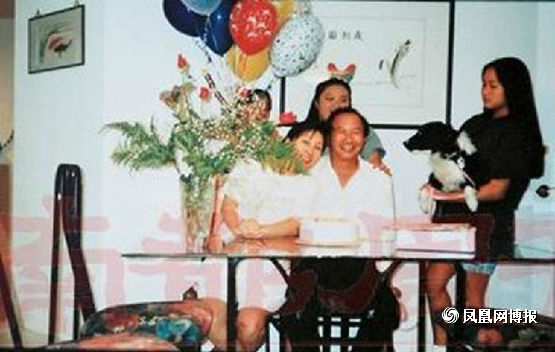


Если он родился в 1946...
Кратко говорит так :
-Я хотел сделать эпопею, как Доктор Живаго.
-Около 50 процентов фильма основан на реальных событиях.
-Я романтик. У меня было большое желание сделать любовную историю и я ждал 15 лет .
-Вы знаете, я никогда не любил 3D.Но наш фильм имеет большие сцены ( наверно декорации имелись ввиду ), красивые танцевальной сцены ,сцена самой аварии. Это выглядит довольно хорошо в 3D.
Далее его спросили о будущих проектах и в частности о как я понимаю ремейке японского фильма " Молодость зверя" ( Сэйдзюн Судзуки )
-Да, мы просто должны получить финансирование. Я люблю этот фильм. Я очень уважаю этого режиссера
Помню он еще хотел снять " Летающие тигры" про летунов Второй мировой , в планах кино есть , будем ждать ...
Но сейчас автор статьи отпишется в стиле, что "на период написания статьи о Ву я об этих фильмах никакого понятия не имел".