


Yuen Wah 元華

Борис Хохлов
November 2, 2008 at 08:18
5 / 10 189

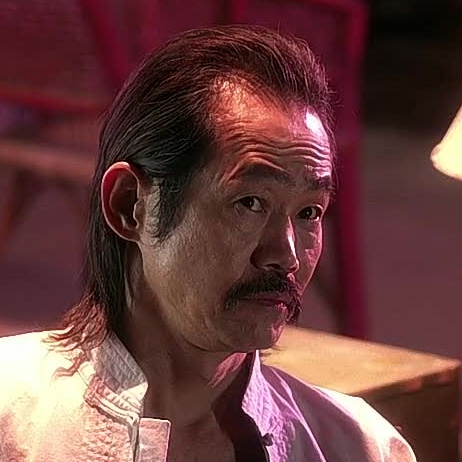
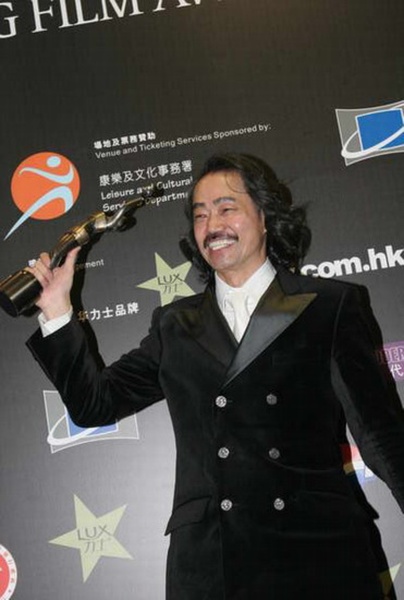
In the 1970s he could be seen in countless kung fu actioners in supporting parts, in the 1980s he became one of the foremost villains of martial arts cinema, and with the arrival of the new millennium he unexpectedly grew into one of the most sought-after character actors – with comic touches, no less. In a sense, Yuen Wah is the preserved history of Hong Kong cinema. A man without whom the cinema of this city-state is impossible to imagine.
Yuen began his film career in the 1970s at Golden Harvest (not counting the 1966 film 18 Darts, in which virtually all of Yu Jim Yuen's students appeared in bit parts) — and his very first film was the epochal Fist of Fury (1972), in which Yuen not only played a small role (a vile Japanese, naturally — with a face like that) but also doubled for Bruce Lee in the stunts that demanded outstanding acrobatics, all the more so since the two actors had very similar builds. Later, Yuen would double for Lee once again in Enter the Dragon (1973).
Like many future kung fu stars, Yuen spent almost the entire 1970s in tiny roles — mainly at Shaw Bros (where he worked in choreographer Tang Chia's group) and Golden Harvest (with Sammo Hung). As for Shaw Bros, it is known that at the time the studio had three main action choreography teams — the first was assigned to Chang Cheh's films, the second to the works of Liu Chia-Liang, and the third supported films starring Shaw stars whose martial arts knowledge was rather limited. Tang Chia worked in that third category, and Yuen Wah often doubled for recognized stars — Ti Lung, Lo Lieh and Tony Liu, for instance. They say there were cases where he doubled for both actors in a fight (!), and only at the editing stage were the opponents combined on screen.
In the 1970s, Yuen Wah took part in many difficult stunts, and it is hardly surprising that he came close to death more than once or twice. One time, right after the lunch break, he was supposed to perform a jump from the fifth floor of a pagoda, but once Wah had already jumped, he realized that the crew members had dragged away the mats that had been laid out beforehand for the lunch break, and he landed so badly that he had to be taken to the hospital. And on the film The Lamps, he was doubling for Tony Liu and in one scene was supposed to leap out of the ground while Lo Lieh, playing the villain, threw a sharpened bamboo stick at him. The timing was slightly off — and Yuen took the stick in the back. It pierced his body next to his heart — he was taken to the hospital without it being removed.
Despite the actor's considerable talent and experience, his own roles remained insignificant for a very long time (something like "third from the right in the crowd of villains falling from a single blow by the hero") — right up until the mid-1980s. Even his talent as a fight choreographer was only recognized in the 1980s — in the 1970s he staged the fights in the action film Deadly Strike, but his next work in that capacity dates only to 1981. That was the film Duel of the Century for Shaw Bros, and from then on Yuen became one of the studio's "staff" action choreographers.
Not for long, though — in the mid-1980s Shaw Bros collapsed and Yuen went out on his own, into a world where his Peking Opera school brothers Jackie Chan, Sammo Hung and Yuen Biao had long been thriving. Wah had missed their first successes and only jumped on the bandwagon in 1985 — he was entrusted with small roles in Heart of Dragon (1985), Mr. Vampire (1985), My Lucky Stars (1985), Shanghai Express (1986) and Where's Officer Tuba? (1986). In addition, he served as fight choreographer on Owl vs. Dumbo (1984), both parts of My Lucky Stars and the aforementioned Heart of Dragon.
Yuen Wah got his first significant role in the military action film Eastern Condors (1987), which was destined to become one of the decade's main calling cards – in it the actor played one of the chief villains, and the film ended with a fight scene featuring him. Sammo Hung and Yuen Biao, who played the heroic roles in Condors, were delighted, and Yuen's rise began. The following few years brought him his best-known roles – Dragons Forever (1988), On the Run (1988), Iceman Cometh (1989), She Shoots Straight (1990), Bury Me High (1991), Police Story 3 (1992), The Guy from Tibet (1992), Kickboxer (1993)…
Interestingly, Yuen Wah always found time to try something new – back in the 1980s he played an insanely funny cowardly eunuch in Mr. Vampire 4, and in the 1990s he eagerly appeared in Stephen Chow's early hits (Legend of the Dragon (1991), The Magnificent Scoundrels (1991), Fist of Fury 1991 II (1992)). Yuen Wah's greatest asset has always been his ability and willingness to laugh at himself – and it paid off. In the mid-1990s Hong Kong cinema was going through a serious crisis, and Yuen turned to television, where he achieved great success (the series Night Journey (1996), featuring him, became very popular) and from which he returned to the big screen only from time to time – and not exactly in very big projects.
Everything changed with Kung Fu Hustle (2004), in which Yuen Wah played a role that would become his calling card for many years to come – a funny, clumsy hick who is nevertheless a secret martial arts master. His duo with Yuen Qiu (another forgotten actress – incidentally, a graduate of that same Peking Opera school, who also trained under Yu Jim Yuen) became one of the highlights of this successful picture and was immediately seized upon by the enterprising Wong Jing, who created the film series Kung Fu Mahjong especially for them – three installments have been released so far. He also cast Yuen in the vampire action comedies My Date with a Vampire (2006) and Don't Open Your Eyes (2006). Yuen Wah's personal life is calm and stable – he has been happily married for many years and has children.

Comments 5
Log in or register to leave a comment
heymanilovekungfu
August 24, 2018 at 18:34
Бесподобный актер! Не единственный дублер Брюс Ли как считают многие, второй это Чинг Йин Лам.
shok
November 9, 2013 at 17:54
Юэнь Ва классный как боец так и актер, запоминающийся в своих ролях
arcanasion
October 31, 2011 at 11:47
Актер просто класс, ну а в фильме драконы на всегда - супер роль - гадкий такой дядька с сигарой, но то что раздражает Чана в битве с Уркидесем просто вызывает восхищение его подлость... Браво Юэнь Ва....
reanimator2003
November 16, 2009 at 06:30
Да,отличная игра в фильмах,я конечно не его фанат,но ценю его как актёра и каскадёра,отличный человек.
Funky_Monkee
December 3, 2008 at 04:11
Одинь из моих любимых актеров, Боец как и каскадер он супер !!!
Edit your comment

