

Ching Miao 井淼


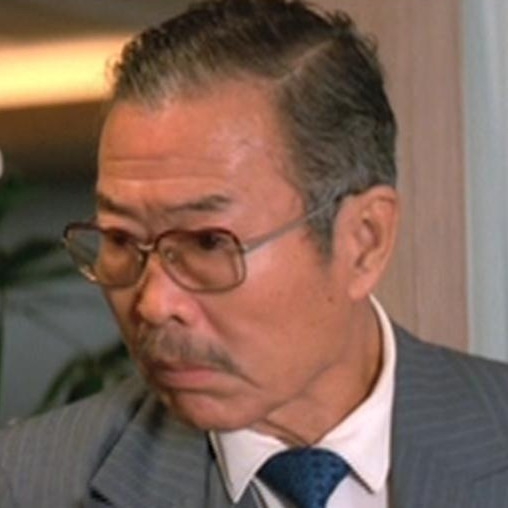
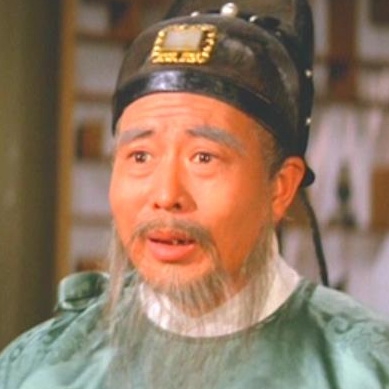
Ching Miao was one of those Shaw Brothers actors who only had to appear on screen for it to be instantly clear who was in charge. He was cast as generals, patriarchs and officials before whom young heroes had to answer for their deeds. For his role as the incorruptible Judge Pao, to which he returned several times, he was nicknamed "the living Pao." Ching Miao won two Golden Horse awards for supporting roles in melodramas, and at the height of Hong Kong wuxia's popularity he often appeared in the same films as his daughter Ching Li, one of the studio's biggest stars.
According to the standard account, Ching Miao was born on March 15, 1913, in Jinan, Shandong Province. Biographical notes say his relatives opened the Shandong Theater in the city, and he fell in love with the stage in childhood. Sources disagree on the date of birth. The Chinese film portals 1905 and Maoyan give March 13, 1913, while Chinese Wikipedia cites March 15, 1911. After finishing school in Jinan, Ching Miao assembled a troupe with which he performed across Shandong, then left to study in Shanghai. At the Xinhua art school he studied commercial design.
When the war with Japan broke out in 1937, Ching Miao returned to Jinan and put together a troupe again. It toured the country with patriotic plays, performing in Xuzhou and Shaanxi Province. Later he worked at the Chinese Film Studio in Chongqing and acted in the troupe "Long Live China." He appeared in Good Husband (好丈夫) in 1939 and in Storm on the Border. The studio put Storm on the Border into production in 1940, and the picture reached screens in 1942. After the war he acted in Shanghai again, in particular in Tong Shi Tian Ya Lun Lao Ren (同是天涯淪落人, 1948), and by the end of the decade he had moved with his family to Taiwan. There he played Sado in Happenings in Ali Shan. It was the first Mandarin-language feature film shot on the island. Filming took place in 1949 in the Hualien area, and the film was shown to audiences in Taipei in February 1950.
In Taiwan, Ching Miao ran a theater troupe, trained young actors and continued to act. He sometimes worked as a makeup artist. He is credited as such in production photos from the shoot of Descendants of the Yellow Emperor (1956) preserved in the Taiwanese film archive. By that time he was already acting in Hong Kong as well. In 1960 he appeared in Li Han-Hsiang's Rear Entrance, and in 1963 he played Zhu Yingtai's father in Li's The Love Eterne. This musical melodrama about lovers who turn into butterflies after death was a huge success in Taiwan. In the film the father chooses a husband for his daughter himself and thereby decides her fate. Ching Miao would later often play such fathers at Shaw Brothers. In 1963 he joined the studio's staff and taught acting in its drama troupe. Ti Lung recalled that Ching Miao was one of the studio's veteran actors who readily gave advice to colleagues. When Ti Lung himself became a star, the two met on set many times.
Ching Miao won his first Golden Horse in 1965 for Best Supporting Actor in the melodrama Between Tears and Laughter (1964). He played General Zhang, to whom a young singer's uncle is ready to marry off his niece while her sweetheart is away. At the ceremony in Taipei, the statuette was accepted on the actor's behalf by one of the film's directors, Yan Jun. He was honored a second time in 1968, in the same category. In Too Late for Love (1967), Ching Miao played the father of a girl whose husband goes off to the front shortly after the wedding. This time he came to collect the award himself. The same ceremony honored the actresses who played his character's daughter and her mother-in-law.
Judge Pao, the incorruptible official of the Song era, was familiar to audiences from stage productions and folk tales. In Inside the Forbidden City (1965) he investigates an old case of a substituted heir, and in King Cat (1967) he himself becomes the conspirators' target. In The Mermaid (1965), Ching Miao played both the real judge and his comic double. In a 1984 conversation with a Taiwanese journalist, he singled out precisely the Judge Pao roles and the military commanders. By that time he could no longer recall on his own the titles of all the films he had appeared in over the years.
According to Michael Hui, Ching Miao was initially invited to play the lead in The Warlord (1972). Hui told the Hong Kong Film Archive that Ching Miao lost his passport and could not make it to the shoot in time. The director then offered the role to Hui. Li Han-Hsiang gives a different version in his memoirs. He had wanted to cast Hui from the start, while Ching Miao's name was put forward by Shaw Brothers management. In the end Ching Miao played the warlord's stepfather. In the film the warlord throws a birthday celebration in his honour. Ching Miao also appeared for Li Han-Hsiang in The Empress Dowager (1975) and The Last Tempest (1976), where he played the courtier Ronglu, a supporter of Empress Cixi.
At Shaw Brothers, Ching Miao often worked alongside his daughter. In Chang Cheh's The Anonymous Heroes (1971) he played General Jin, while Ching Li's character helped procure weapons from the military. Both also appeared in The House of 72 Tenants (1973), where Ching Miao played a doctor. The box-office success of this comedy by Chor Yuen helped bring Cantonese back to Hong Kong cinema. Later the director cast father and daughter in his adaptations of Gu Long's novels. In Killer Clans (1976), Ching Li played the clan leader's daughter, with whom a hired assassin falls in love, while Ching Miao appeared as Yi Qianlong, one of the clan's elders. In The Sentimental Swordsman (1977) he was the abbot of Shaolin. In Liu Chia-Liang's Shaolin Mantis (1978) he was once again cast as a father. His Wei Jingyuan keeps his distance for a while, but in the finale it is he who decides the hero's fate.
In the early 1980s Ching Miao again donned judicial robes, now in contemporary films as well. In Bewitched (1981) his judge has to get to the bottom of a case involving black magic. Two years later Ching Miao played a judge in the comedy Perfect Wife?!.
In 1984 Ching Miao decided to settle in Taipei and signed a three-year contract with the Taiwanese broadcaster TTV. In Hong Kong, he told TTV Television Weekly, it had become harder to find work he enjoyed. Serious costume dramas were being made less and less, and in the new comedies he was expected to give such exaggerated performances that he did not want to take on those roles. Directors used to give actors the whole script and discuss it before shooting, whereas now pages were sometimes brought one at a time straight to the set. At times he did not even have time to work out who was a friend and who an enemy in a scene. His daughter and his son Ching Hung lived in Taiwan. His son had worked as an assistant director at Shaw Brothers and as a screenwriter for Hong Kong television, and after returning to Taiwan he acted, wrote scripts and produced programmes. Ching Miao himself, in the year of his return, appeared in the historical series Wei Zhen Si Hai.
In Taipei Ching Miao could once again go to Peking opera with old friends. In Hong Kong he had sometimes performed himself as an amateur, singing the roles of mature men and going on stage with a false beard. At home he grew flowers, and most often cut mountains and rivers out of paper, as in Chinese ink landscapes. By the time of his return he had been doing this for more than ten years and was thinking of bringing his works from Hong Kong for an exhibition. One of his last films was Disciples of the 36th Chamber (1985). Ching Miao died in 1989. The prevailing account is that he died in Taiwan, though IMDb lists Hong Kong as his place of death.